

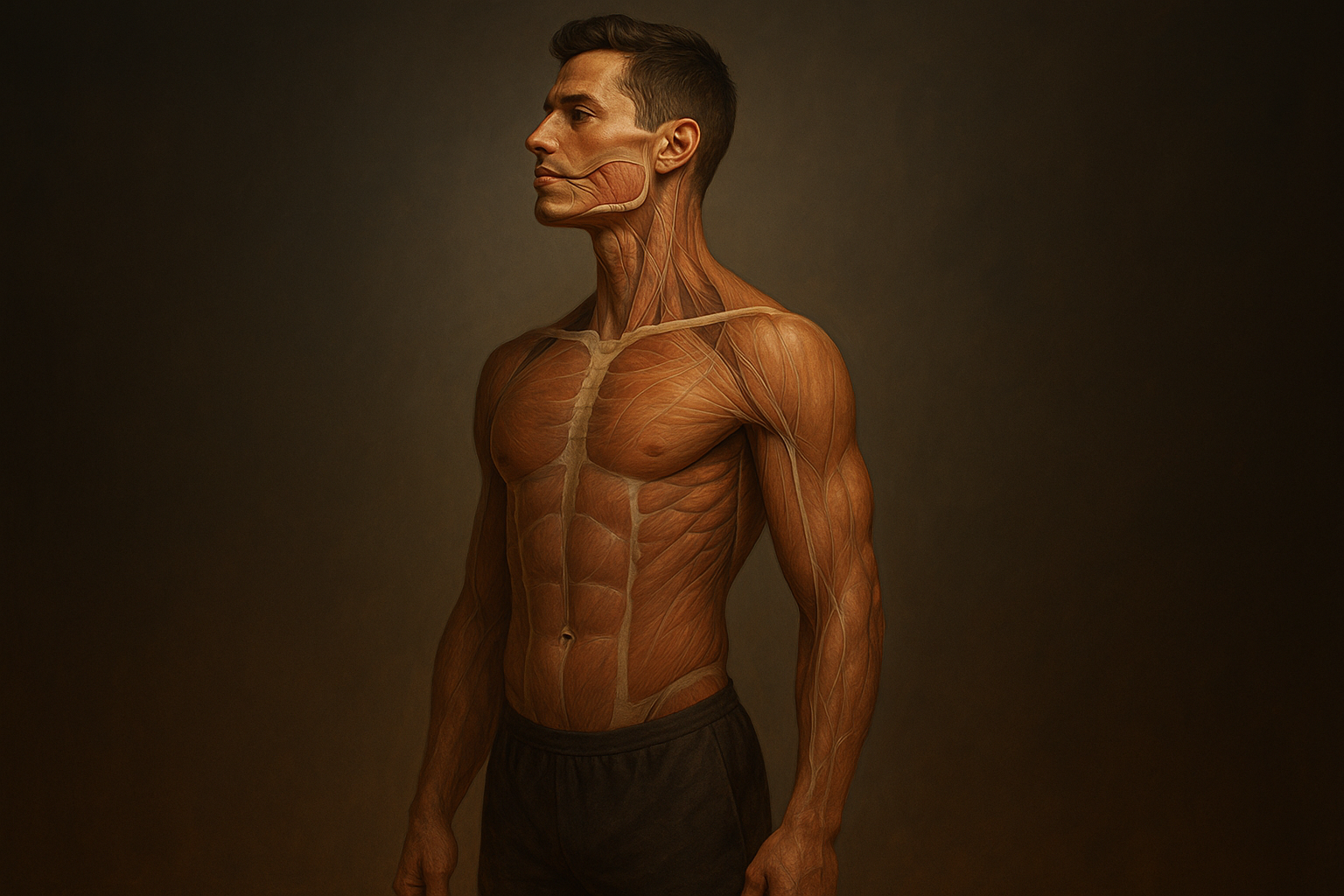
Your tongue is the top of a fascial chain that runs from lips to hips. When it drops from the palate, the whole chain shifts — head forward, ribs compress, hip flexors tighten. What looks like a posture problem in your PT session often started at the roof of your mouth.
Here's the anatomy that ties tongue position to whole-body alignment, and the resting-posture retraining that unwinds the chain from the top down.

The Fascial Chain That Nobody Talks About
Anatomy classes teach the muscles in isolation. In reality, muscle groups connect through fascia — a continuous connective-tissue network — into functional chains that transmit tension across the body. The tongue sits at the top of what myofascial researchers call the "deep front line" — a chain that runs from the roof of your mouth through the hyoid, throat, chest, diaphragm, psoas, and down into the pelvic floor.
When the tongue lives in the roof of the mouth (sealed against the palate), the top of that chain is anchored. Head sits over shoulders. Ribs stack over pelvis. Front-line tension is balanced.
When the tongue drops to the floor of the mouth, the top of the chain loses its anchor. Head drifts forward. Cervical spine compensates. Ribs compress. Diaphragm tightens. Hip flexors shorten. The whole front line pulls into flexion — the classic "screen posture" that PT patients spend months trying to unwind. Tongue posture pillar →
The Downstream Signals
Tongue posture doesn't announce itself. What announces is what shows up downstream in the postural chain.
Forward head posture.
Ear no longer over shoulder. Chin protrudes. Cervical spine compensates for the mandibular drift downstream of low tongue posture.
Compressed rib cage.
Chest-first breathing pattern. Ribs anteriorly compressed. Diaphragm can't expand fully — chronic shallow breathing follows.
Hip flexor tightness.
Psoas chronically shortened. Lifters recognize the pattern — hard to hip hinge cleanly, low back compensates. Fascial chain tension pulls hips into flexion.
Jaw tension & TMJ symptoms.
Direct downstream: when the tongue doesn't hold the palate, the jaw compensates. Chronic masseter tension is often postural, not stress. TMJ pillar →
Chronic neck-upper-back tension.
Suboccipital and upper-trap tension that PT alleviates temporarily but keeps returning. The pattern above the neck is holding it in place.
Mouth-breathing pattern.
Low tongue posture and mouth breathing are the same variable seen from two angles. Both drive the postural chain into flexion. Mouth breathing pillar →
Retraining The Top Of The Chain
PT unwinds tension. It doesn't necessarily change the pattern that keeps producing the tension. If the top of the chain (tongue posture) stays unaddressed, the downstream tension recurs within weeks of finishing PT. Retraining the substrate is what makes the PT work stick.
Step 1 — Awareness of resting position.
Notice where your tongue lives 20 times a day. If it's on the floor of your mouth, that's the pattern to unwind. Practice locating the "spot" (bumpy area behind upper front teeth) 10 times a day. Five tongue exercises →
Step 2 — Passive anchor with Adult Spot Pal.
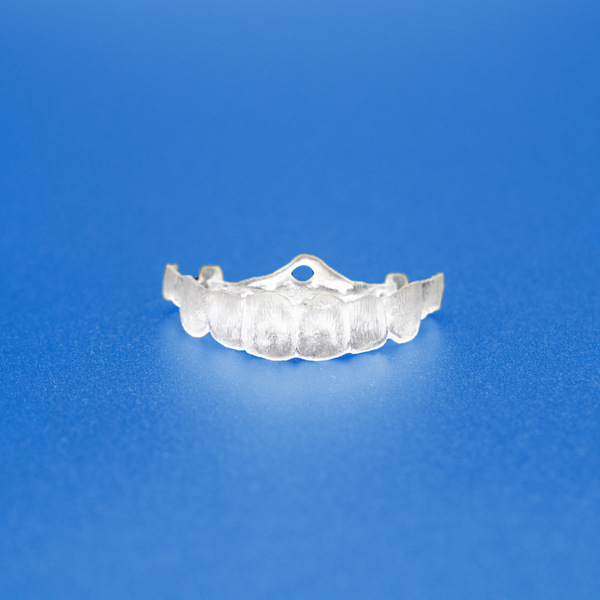
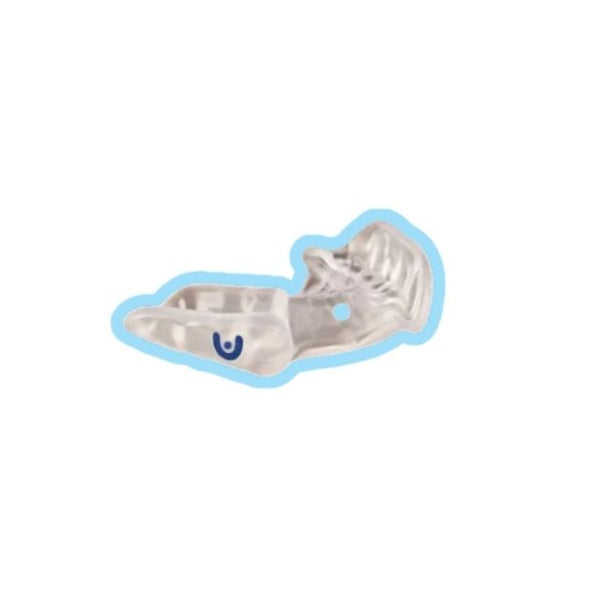
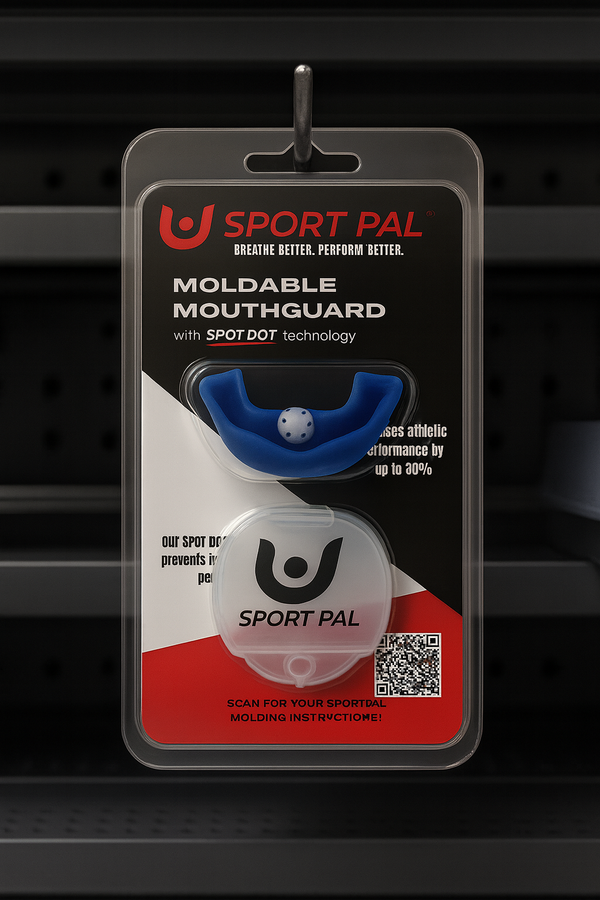
The patented Adult Spot Pal provides a tactile "spot" for the tongue to home against during quiet work — reading, screens, desk hours. 30-60 minute stretches. Six to eight weeks in, the rest position becomes autonomous.
Step 3 — Pair with PT / mobility.
Continue whatever mobility, PT, or corrective exercise your practitioner has you on. What changes is that the corrections start sticking — because the substrate producing the pattern is being retrained in parallel.
Step 4 — Sleep carryover.
Daytime tongue posture carries into nighttime tongue posture. Sleep-airway improves, morning tension decreases, HRV improves. This is where the postural chain fully unwinds — the recovery hours actually recovering. Sleep & airway pillar →
"I'd been in PT for two years for chronic upper-back tension. Would improve during a session, come back within a week. My PT finally asked how I breathed and where my tongue lived — I said 'the floor, always the floor.' Started wearing Adult Spot Pal during work. Ten weeks later my upper back has stopped resetting. Same PT protocol, different underlying substrate."
The Adult Postural Stack
Common Questions
Does tongue posture really affect hip flexibility?
Not directly and instantly — but through the fascial chain, chronic low tongue posture correlates with anterior-line tension patterns that show up as hip flexor tightness. Correcting rest posture over months tends to shift the whole chain toward extension. Not a hip flexibility protocol on its own, but a genuine upstream contributor.
Should I do this instead of PT?
No — do it alongside. PT unwinds tension and teaches mobility. Tongue-posture retraining addresses one of the substrates producing the tension. The two are complementary. Chronic PT patients often see the biggest change from adding rest-posture work on top of continued PT.
How long before postural change is visible?
Head-forward posture typically starts shifting at 6-10 weeks of consistent daytime Adult Spot Pal use. Full postural change (jaw, ribs, hips) takes 3-6 months as the fascial chain unwinds and the neuromuscular pattern consolidates.
Is this evidence-based?
The fascial-chain framework (deep front line) is documented in myofascial research (Myers, Schleip). Tongue-posture correlation with cervical alignment has been formally studied. What isn't yet available is large RCT data on rest-posture appliance therapy specifically — that literature is emerging. The mechanism is well-supported; effect-size data varies.
Does this help athletes with performance?
The postural benefits carry directly into athletic mechanics — better ribcage expansion for breathing under load, cleaner hip hinge patterns, less compensatory jaw clench. Not a PR-producing intervention on its own, but a substrate improvement most athletic programs don't touch. Athletic performance pillar →
Share:
Spot Pal Junior vs Spot Pal Mini: Age & Case Guide
The Best Sleep Position For Airway: Side, Back, or Prone?