

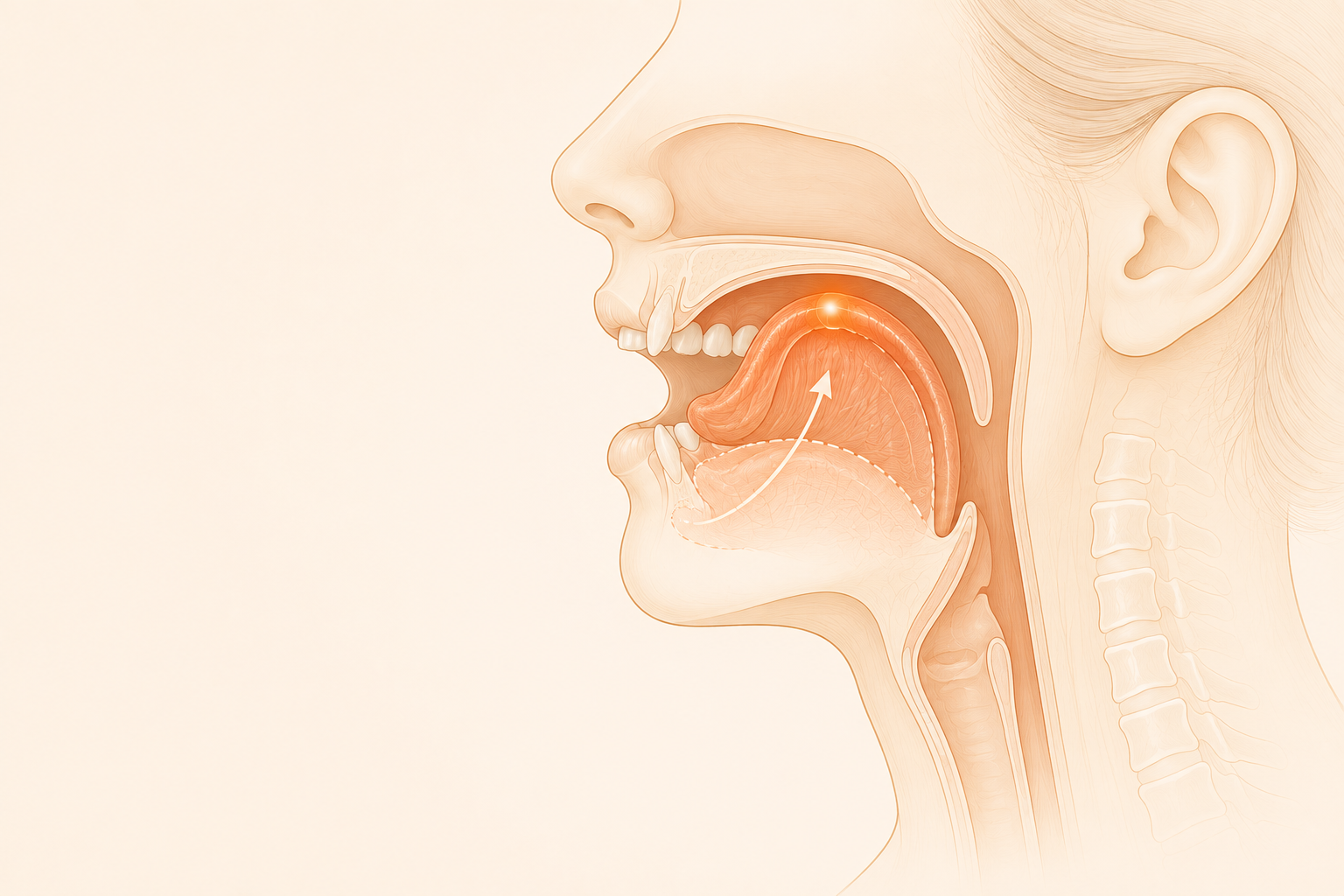
The /r/ is a notorious late-acquisition sound. When it doesn't fully lock in during childhood, it becomes one of the most common adult residuals — clean in structured drills, drifting under stress, fatigue, or on-camera situations where you least want it.
Here's why adult /r/ carryover is stubborn, and the substrate-first protocol that actually resolves it.

Why /r/ Is The Sound That Sticks
Of all English phonemes, /r/ is one of the most complex. Unlike /s/ or /t/ — which have a single defined tongue position — /r/ has multiple valid production styles (retroflex, bunched) and 32 distinct allophones depending on surrounding sounds. It's the last sound many children acquire, and the one that most often persists as an adult residual.
Why it sticks in adults:
- Multiple valid productions. Kids can succeed in therapy with one style and fail to generalize the other. Adult /r/ carryover often reflects incomplete generalization across contexts.
- Vocalic /r/ complexity. Words like "bear," "here," "star" combine /r/ with surrounding vowels in ways that require distinct tongue configurations. Adults who cleaned up prevocalic /r/ ("run") may still drift in vocalic contexts.
- Low resting tongue posture. The substrate. If the tongue lives in the floor of the mouth, /r/ has to be constructed from scratch on every attempt. Fatigue, stress, and speed all reveal the underlying pattern. Speech pillar →
- Neuromuscular habit depth. By adulthood, the "wrong" /r/ has been produced hundreds of thousands of times. Rewriting the motor pattern takes deliberate rehearsal against the corrected substrate.
Where Adult /r/ Drifts (And Why)
On camera / in interviews.
Sympathetic-tone spike increases muscle tension and reverts to the childhood motor pattern. The pattern that emerged in structured SLP contexts hasn't hardened into stress-tested carryover.
Under fatigue.
Neuromuscular precision drops with fatigue. Corrected patterns fade first because they're newer; childhood defaults reassert. Long presentations, end-of-day meetings, tired conversations all show it.
In fast conversation.
Speed forces the tongue to default positions. If rest posture is low, /r/ builds from too far away. Slower speech masks this; fast speech reveals it.
In multi-syllable words.
"February," "library," "particular" — words that carry multiple /r/ productions in different vocalic contexts often reveal drift where single-syllable words don't.
The Substrate-First Adult Protocol
Phase 1 — Rest posture retraining (weeks 1-8).
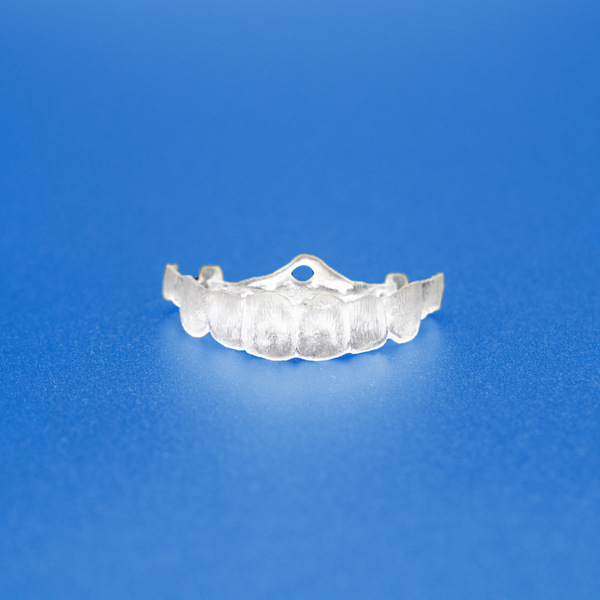
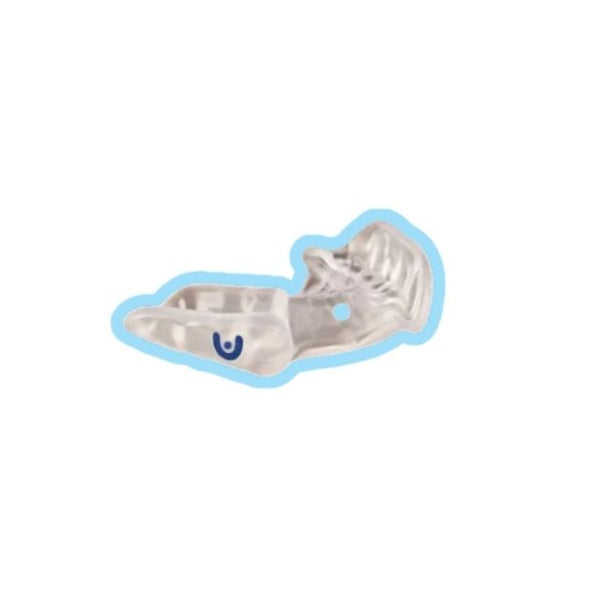
Adult Spot Pal — the patented resting-posture appliance — during focused work. 30-60 minutes daily. Builds the tongue-palate seal that makes every subsequent /r/ production start from the right neutral position, not the wrong one. Without this, articulation drills fight against a substrate that keeps regressing. Tongue posture pillar →
Phase 2 — Isolated /r/ position work (weeks 4-8).
With an adult-focused SLP, identify which /r/ style (retroflex or bunched) works cleanest for your anatomy. Practice sustained /r/ hold for 5-8 seconds. Build proprioceptive awareness — feel where your tongue is when the sound is clean. Practical exercises →
Phase 3 — Vocalic /r/ minimal pairs (weeks 6-12).
Bear/beer, hair/here, star/store — pairs that isolate the /r/-colored vowel across contexts. Where adult /r/ therapy often stalls without deliberate work.
Phase 4 — Stress-tested carryover (weeks 10+).
Read aloud into recording. Simulated presentations. On-camera practice with playback. Real conversation with awareness. The corrected pattern isn't done until it holds under the exact conditions where it used to drift. Adult residual speech overview →
"I'm a lawyer. Depositions, court appearances, client meetings. My /r/ would drift under pressure — always at the worst moment. Adult SLP did the traditional drills, plateaued at 'clean in office, drifting in court.' Added Adult Spot Pal for the rest-posture layer during trial prep. Six months in, my last cross-examination — colleague noticed nothing. That was the win."
The Adult Speech Family

Common Questions
Am I too old for /r/ therapy to work?
No. Neuromuscular motor patterns remain trainable at any age. Adult /r/ carryover moves slower than childhood therapy because the habit is deeper — but the same rest-posture-plus-articulation approach that works in kids works in adults. Timeline is 3-9 months of consistent work for meaningful shift.
Retroflex or bunched /r/ — which should I use?
Depends on your oral anatomy and which produces the clearest sound for you. Both are valid English /r/. An adult-focused SLP will test both and identify which works with your specific mouth shape. Don't try to force one over the other — go with what produces the clearest resonance.
Do I need to see an SLP or can I do this myself?
SLP strongly recommended for adult /r/ work. Multiple valid productions, subtle drift patterns, and vocalic-context complexity make self-diagnosis and self-correction difficult. Find one who works with adults specifically. Adult Spot Pal supports the substrate work between sessions.
Will my /r/ ever be 100% clean under all conditions?
Depends on the case. Most adult carryover work achieves reliable clean production under normal conversational conditions with occasional drift under extreme fatigue or stress. Some cases achieve fully stress-tested carryover. Setting realistic expectations is part of the protocol — most adults are happy with 90%+ reliability.
Is this insurance-covered?
Adult articulation therapy coverage varies significantly by insurance plan. Some cover with a diagnosis of articulation disorder; others restrict to pediatric. Adult Spot Pal is typically out-of-pocket. HSA/FSA may cover — check with your administrator.
Share:
Bruxism: The Real Causes Behind Chronic Nighttime Clenching
Nasal Breathing for Runners: How to Push Your Aerobic Ceiling